Health & Healing
Health & Healing
It is over-simplistic to say menopausal symptoms are due only to the fall in hormones. Menopause signals a much deeper process of entering another phase of a woman's life, and may signal not deterioration or ageing but maturation into the full blossoming of grandmotherhood.
Much has been written about menopause and yet it seems at times that there is more confusion, more frustration than ever and a great deal of disinformation.
It is over-simplistic to state that menopausal symptoms are due only to the fall in hormones, especially oestrogen, and that all women should be on HRT to counteract this fall. Firstly, large numbers of women do not have any symptoms related to the fall in hormones. Secondly, the incidence of menopausal symptoms varies in different countries despite the fact that hormone levels fall in all women. And finally giving HRT is obviously not a natural state of affairs.
It is natural for hormone levels to fall during menopause and this may signal not a process of deterioration or ageing, but rather maturation into the full blossoming of ‘grandmotherhood’.
Menopause is not just about hormonal change, but signals a much deeper and profound process of entering into another phase of a woman’s life. The persistent emphasis on the physical body and its biochemistry tends to throw a veil over our deeper understanding of ourselves as emotional/mind/spirit beings who have a physical body which runs through its own instinctual and genetically-programmed processes.
What that process is will be different for each woman. Leslie Kenton (Passage to Power) describes the menopause as ‘a time of celebration when our creativity is no longer bound to our obligation as a member of the human race to propagate the species.Often, for the first time in a woman’s life, her creativity can be set free for use in whatever way the whispers of her soul dictate.’
Menopause from a physiological point of view can be divided into two parts – the perimenopausal period and menopause. Perimenopause is the transitional period between regular, ovulatory menses until the menses stops completely, and may last anything from one to three years or even longer.
It is during this time that many women experience mild to severe symptoms. This period is characterised by fluctuating levels of oestrogen and progesterone and missed ovulation. As oestrogen hormone production falls, the pituitary gland increases its secretion of follicle stimulating hormone and luteinising hormones.
While physiologists are able to determine and measure what is going on in the body, what is not at all clear is why any of this is happening, and where the controls are. It is fascinating to consider that there is a constant turnover of cells, and cell death called apoptosis is a feature of normal healthy biological life. Skin cells have a very rapid turnover but even the cells of liver and other organs are being replaced continuously.
On a molecular level electrons, protons and other particles of the atom are appearing and disappearing at a very rapid rate. Nothing physical in the body is fixed, everything is turning over, and yet there appears to be an order to the way things function as if there is some underlying intelligence at work.
Even the genes have a turnover, and the electrons and protons within the genetic structure appear and disappear at the same rapid rate as everywhere else.
So where is the control, and what determines when the hormones will be switched off? These are obviously major questions which have no answers. Scientists are good at measuring what can be measured but there is much that is still not measurable in human beings, and what is not measurable is the key to understanding the real nature of menopause. The fall in hormones is only one reflection of the process which is called menopause. It is incorrect to blame all the symptoms, or even no symptoms, on the play of hormones within the body when the hormone change is reflecting a much deeper change.
When a person is angry this is reflected as changes in the body posture and facial expression. Yet neither the body nor the face is angry. The anger is merely reflected into the body. The anger is much deeper than its reflection. The thought ‘hand go up’ precedes the hand going up. The hand reflects the thought. In a similar way hormonal changes are reflecting a deeper shift. This shift cannot be measured. Only the hormones can be measured. It is this shift which is responsible for the symptoms of menopause and not the fall in hormones.
Oestrogen is produced by the ovaries. In the mid-cycle an ovum (egg) is produced. This ovum is responsible for the production of progesterone during the premenopausal period. Many menstrual cycles do not produce an ovum so that initially progesterone levels will decrease. The production of oestrogen by the ovary also decreases. This fall in oestrogen is a trigger for the pituitary gland to secrete FSH (follicle stimulating hormone).
The changing patterns of hormones and the slow and erratic fall of hormones means that measuring hormone levels in the blood is unreliable unless a number of readings are taken over a period of time. There are wide fluctuations in oestrogen levels during the day and over the month. Single tests of oestrogen or FSH are poor indicators of whether a woman is pre-menopausal.
True menopause is defined as no menses for at least 12 months and with the ovaries no longer releasing eggs. At this point the woman can no longer fall pregnant. Without ovulation, progesterone levels take a nosedive.
With estrogen and progesterone levels way down, the woman is physiologically speaking no longer the same person. It is important however to keep in mind that the hormonal change is reflecting much deeper underlying change. Medical science needs to be reminded that what is known is still only a small part of the whole. Very much is still in the realm of the unknown.
Is menopause a disease with symptoms and signs that needs to be treated? Or is it a natural shift in physiology reflecting a much deeper meaning which should be relatively asymptomatic? The fact is that some women go through the menopause with few symptoms despite the fall in hormones. The claim that the fall in hormones is responsible for increasing osteoporosis and heart disease does not hold if one considers that hormones have been falling since women first existed, yet heart disease has only been prominent in the last 100 years, and even osteoporosis is not universal. While the USA has one of the highest osteoporosis rates in the world, there are other areas where this disorder is relatively rare, even among older segments of the population. Black South Africans for example have an extremely low rate of osteoporotic fractures, and the incidence of hip fractures among elderly Japanese is much less than half that in Western countries. (Better Bones, Better Body Susan Brown). Yet hormones fall in all women.
So while the fall in hormones must be regarded as natural, menopausal symptoms severe enough to interfere with a person’s sense of wellbeing and health should not be regarded as normal. Nor can we say that the symptoms of menopause, heart disease and osteoporosis are due to the fall of hormones just because they occur together.
The argument for giving hormones to all women is that all the symptoms of ageing, including the menopause, is due to the fall in hormones. As indicated above this is simply not true. In all women the hormones fall, yet some get old and show symptoms of ageing much sooner than others. As indicated the incidence of heart disease, osteoporosis and menopause differs all around the world.
Other factors are therefore involved and need to be discussed because they have an influence in the management of symptoms.
It may be true that giving hormones can affect the symptoms in some women, but all it means is that by changing one aspect of the problem the symptoms are improved. There are many other ways to accomplish the same end point. Synthetic hormones which are not bio-identical should be regarded as drugs and only considered when nothing else helps to control symptoms.
1. Natural hormones: Premarin used by conventional doctors and made from horses’ urine is not natural for humans. What is different is that natural hormones are exact copies of the body’s own hormones. This is referred to as bio-identical. Their source is usually a natural plant base which goes through a number of processes to produce the end product. These hormones are also used in much lower doses than Premarin and other synthetic hormones. Synthetic hormones are produced chemically from beginning to end and are not bio-identical.
Generally it is the progesterone hormone which decreases first because of the lack of ovulation, and can be prescribed in the form of a cream to be applied to sensitive parts of the skin.
When oestrogen is required for vaginal dryness or severe flushing, bioidentical estrogen should be used. What we refer to as estrogen is actually composed of three estrogens: estriol, estrone and estradiol. Creams containing all three in their natural ratio can be obtained and should always be tried first, with or without progesterone.
2. Diet: The usual advice, to keep away from processed foods, sugar consumption, and excess salt and to drink lots of water and plenty of vegetables, is appropriate here. In addition one should have a diet high in phytoestrogens such as soy, flaxseed and flaxseed oil, nuts, whole grains, apples, fennel, parsley and alfalfa.
3. Soy foods. These contain genistein and daidzein which have a mild estrogen effect.
One cup of soybeans provides approximately 300mg of isoflavines, the equivalent of 0.45mg of conjugated oestrogens or one tablet of Premarin. Various capsules and tablets are now available containing these products in standardized form.
4. Nutritional Supplements: Natural Vitamin E has powerful healing benefits in the body and in several clinical studies has relieved atrophic vaginitis and hot flushes.
Hesperidins combined with Vitamin C may also relieve the hot flushes, lessen leg cramps and ease bruising.
5. Herbal medicine: A range of herbs has been shown to be very useful in menopause. Cimicifuga racemosa (black cohosh) in particular. Vitis Agnus-castus and Angelica sinensis (dong quai) are both popular and often combined together.
6. Exercise: Yoga especially is recommended. The stretching and deep breathing has a profound relaxing effect on the body and mind and at the same time opens the system and improves oxygenation.
Women with symptoms related to menopause usually seek treatment. Symptoms should be regarded as a wake-up call requiring lifestyle changes including a good exercise programme, change in diet and some nutritional supplements. It is also a time to review your personal situation and examine relationship issues, work at motivational issues and deeper spiritual goals.
If these changes are still inadequate then move to the next phase which may include other nutritional supplements plus herbal products and/or phytonutrients and/or bio-identical oestrogen and/or progesterone creams.
The last phase, if the above is still not adequate, would be the stronger bio-identical oral oestrogen containing 17-beta estradiol (oral or transdermal patch) or progesterone capsules.
Women without symptoms of menopause who seem to be flowing very nicely through this period should nevertheless take supplements and check their lifestyle.
Supplements should include a calcium, magnesium, vitamin D mix, vitamin K, essential fatty acids, vitamin C and E and an anti-oxidant.
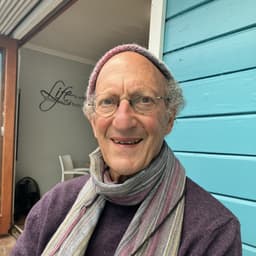
Dr Bernard Brom
Founder, Creating Health
Bernard Brom qualified in medicine in 1965. He gave it up, travelled for six years, and came back to spend the next sixty asking one question: how does health actually work? He founded the South African Society of Integrative Medicine, chaired it, started its first journal, wrote two books — and still sees a few patients every week, "to stay in touch with the territory."
Continue exploring
Health & Healing