Philosophy
Sacred medicine, sacred being
Free
Healing is not the treating of disease but the recognition of the sacred in the meeting between healer and patient. Bernard begins on a sand path in the wetlands, where the walk is never the same twice, and works outward to what modern medicine walled off when it took its model of living systems from Newtonian physics.
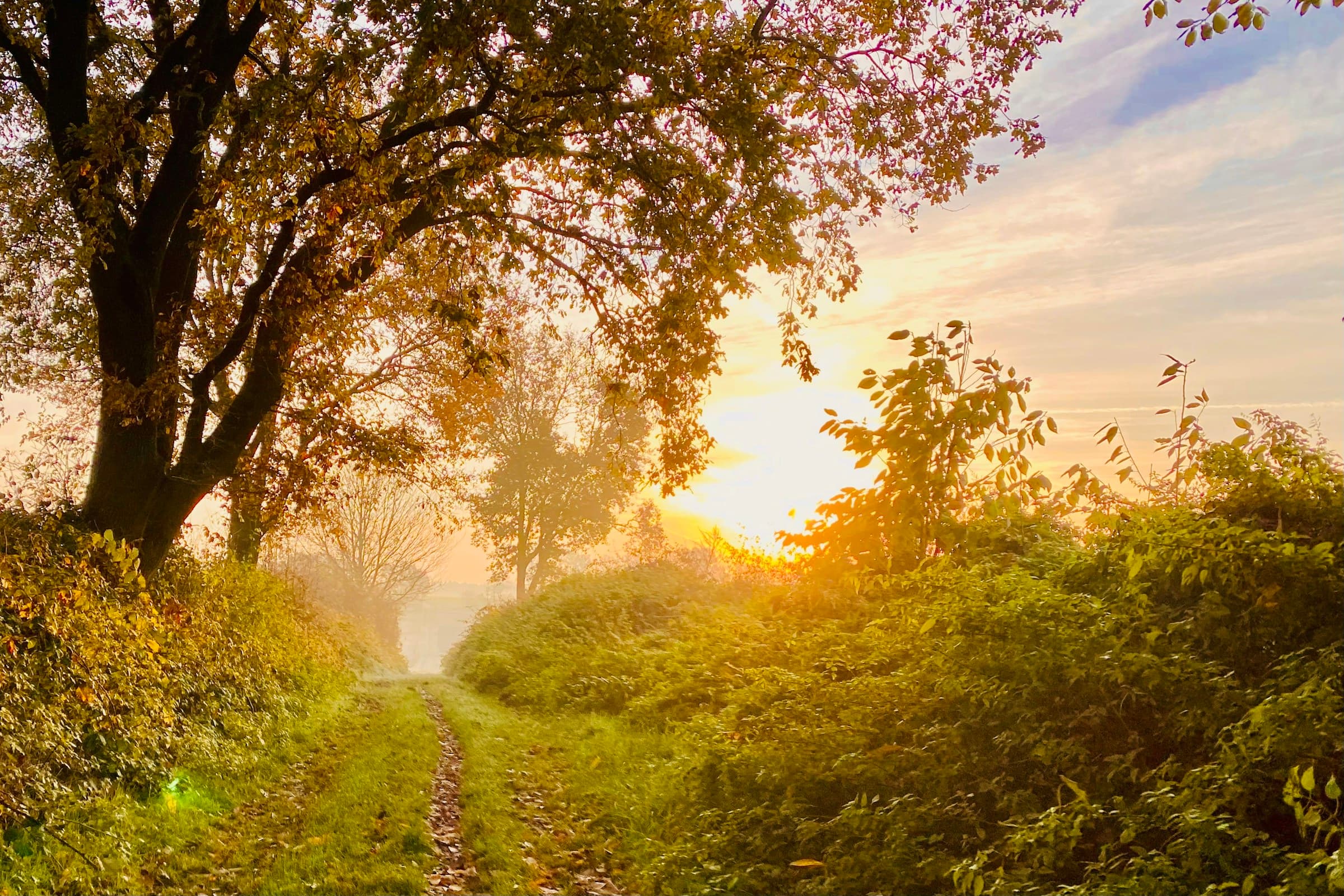
Most days I walk with my dog in the wetlands through all the different seasons. The path is sandy and very uneven as this is also a path for horses and their riders to get to the beach. There are a few regulars on horseback and we greet each other, remark on the weather, perhaps share a warning about snakes seen close to the path, or speak of the beauty of new flowers opening to the sun.
It’s the same walk most days and yet it never seems the same to me. I recognize that my experience each day is actually dependent much more on my mood and the mental clarity and presence that is with me on this walk than what I see, hear and smell along the way.
It is the ‘being’ that I am that meets the walking process and this defines my experience. When I am in a good ‘mood’, feeling very centred and at peace, then the world around me shines with a glow of recognition and I find myself chatting to the trees and bushes which are often in flower. It is then that I recognize the sacred.
When my thinking mind dominates the internal conversation and manages even to stir up emotions and imagination, then this reality tends to hide the sacred.
There is some difficulty in talking or writing about the sacred because it is beyond words, and this is why the thinking mind struggles to define or capture it. Poetry, song and body movement can point to it, but writing does not do it justice, and I know that I am struggling in this attempt to reach into this space. The sacred is unknowable to thinking, and yet thinking can circle around it. I recognize that I am about to start a dance, a circling around this ‘sacred’ space.
Circling around ‘sacred’
Most people have used the word ‘sacred’ at some point in their life to point to something special, something that took their breath away, something that seemed holy perhaps, even divine. Something that took them beyond their usual understanding of life and experience. It was often an ‘aha’ moment, a recognition of something magnificent, a transformation of the ordinary into the extra-ordinary.
The fact that we have a word for this ineffable experience points to the way that almost everyone is at times soaked in the sacred. Whatever that is, we seem to know it. How is it that we can even talk about this experience of the sacred, very often in quiet tones, a silence that only the eyes give away, a touch on the arm that tingles all the way to the heart.
Very often at this point there is a sense of awe and wonder as if we have entered into the holy of holies.
Perhaps the best way to approach the sacred is by pointing to what it is not. Words which point away from the sacred include the profane, secular, lay, temporal, something which is not religious or sacred. All the latter are driven by the contracted self, the small self, the arrogant self who refuses to see past those narrow boundaries into the depths which constitute the expanded self.
So here is the first flag: what I am referring to as the contracted self and the expanded self. The former is often referred to as ‘ego’ and the latter as ‘soul’. I prefer to use the terms contracted self and expanded self because they point to something quite specific.
The contracted self has drawn a ring around itself that gives it a feeling of controlling its environment. That ring includes some part of reality and excludes other parts of reality. This is not always a conscious decision, but happens over time. Everyone’s ring of containment is different and this results in our conflicts with others, our judgements and our sense of reality. That ring of containment is useful to the contracted self. It feels safe to create a boundary just as a child may crawl under a bed or hide behind a curtain. Over time that encircled space becomes more entrenched, and now the contracted self will even defend its space and that may require force, attacks on its enemies who are trying to breach that wall, a break-up of a marriage, buying out a competitive company, creating rules and regulation to prevent people from crossing the boundary. These are all attempts by the contracted self to defend the space it calls home.
The expanded self attempts to live outside those containing walls. It recognizes the limitations of those walls, and that it is narrow minded and prevents expansion and even creativity. The expanded self is interested in expanding, the mystery of life and living is a constant call to its curious mind. It recognizes that evolving is a constant stepping out, taking the path less travelled and letting go of preconceptions that don’t serve the journey.
So we have now found the doorway to the sacred. The contracted self deals with the known, that which it feels it can control. The sacred, the mystery, the divine, God, soul and spirit are all anathema, taboo in its household, unless they can become a noun and point to something the small self can use and even control. Religious fanaticism contracts God to what it can use, and in the name of God killing of the infidel is allowed.
Entering the Sacred Space
Sacred is not a noun, so even to talk about a ‘space’ does not do it justice. Nevertheless, if we are to allow this conversation to continue, we will need to concede to using words.
It's a bit like the word ‘infinity’. Finite is a space that science can measure but infinity is different because it has no edge. Sacred or God is something like that, they have no edges so it is difficult to talk about. And yet here I am trying to reach into that non space to try to understand why and when I use the word sacred.
‘The first gulp from the beaker of knowledge estranges us from God, but at the bottom of the glass God is waiting for him that seeks.’ – Carl Friedrich von Weizsacker
‘By love he can be caught and held, but by thinking never.’
The author of the Cloud of Unknowing Anon (14th century)
I am not sure how one enters the Sacred Space because in my experience it happens spontaneously, a surprise, when thinking is stopped by a moment that breaks the wall of containment and reveals a different insight into reality, by love appearing as a deep feeling, when silence envelops me by its presence, when I see an act of true caring by another person towards an animal or a human being in need, then the presence of the sacred rushes in and often brings tears to my eyes.
Sacred Medicine
Medicine is the art and science of healing.
Healing is not about treating the disease but more about bringing the person, the environment, the space within which life can flourish, more in harmony with nature. This process has always been entrusted to the medicine people who understood the sacred nature of their work and its relationship to the divine.
Modern medicine has drifted away from its roots and has used a limited form of science (Newtonian science) based on a machine-like model of reality to investigate the complex nature of living systems. This has reduced medicine to ‘fixing’ or treating the parts of the physical, measurable parts of that machine which appear to be broken. This is container medicine, a medicine which has built a wall around itself using Newtonian science to create this machine model of living systems.
Sacred Medicine is a path of healing that honours the interconnectedness of body, mind, soul and spirit. It is much less about treating the disease. and much more about recognizing the ‘presence’ of the sacred in the healer-client interaction.
This is the sacred path of healing rooted in ancestral wisdom and mystical traditions that understood human beings' presence within the cosmos.
Sacred medicine brings back the soul and opens the heart to the mystery of life and the recognition that love, compassion, humility, presence, grace and wise choices are all part of deep healing. Ill-health is not the absence of health but rather a call from health for help. It is the very call of the divine within, pointing towards a more harmonious path to follow and a realignment of the individual with nature, spirit and the deeper truth of who they are.
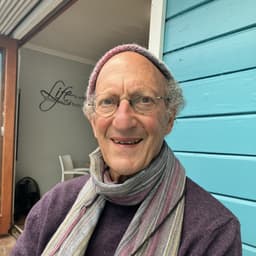
Dr Bernard Brom
Founder, Creating Health
Bernard Brom qualified in medicine in 1965. He gave it up, travelled for six years, and came back to spend the next sixty asking one question: how does health actually work? He founded the South African Society of Integrative Medicine, chaired it, started its first journal, wrote two books — and still sees a few patients every week, "to stay in touch with the territory."
Continue exploring