
Medicine
Integrative medicine Q & A
Free
The questions Bernard is asked most often, answered plainly — what integrative medicine actually is, why he reads ill-health as health asking for help, and what he means by giving the body-mind a tune-up.
Integrative medicine and the treatment of ill health
What is integrative medicine ?
Integrative medicine is much more than just mixing the more conventional approach of using drugs and surgery with natural medicines. In Integrative Medicine there is the basic understanding that healing is an innate, intelligent function of the body-mind mechanism.
Only the body-mind can heal.
The majority of people today, even children, have many symptoms and signs of ill-health: tiredness, headaches, muscle aches, difficulty in concentrating, moody, dull headed, forgetful, poor sleep patterns, anxiety, indigestion, constipation etc. We are all ‘out of tune’, and like a motor car which does not function optimally when out of tune, neither do we.
When we go to sleep something remarkable happens. At the end of the day we often say we feel ‘dead tired’ and then go to sleep. And if this is a ‘good’ sleep we expect to wake up refreshed and ready for another day. During the night the body rejuvenates itself, (does a tune up) while in that sleep state. Clearly the body does not go to sleep during the night, and is able to do the tuneup while the thinking mind is asleep. All this happens under the umbrella of melatonin, and this is why this hormone is so important not just for sleep but for the rejuvenation process.
This tune up process is a natural process and works especially well at night when the stress of being awake is much less present . The tuneup process is still ongoing during the day but has to compete with the extra load of day time activity.
Integrative doctors understand that healing is dependent on good healthy functioning and that treating disease without supporting health won’t work in the long run. Their approach is to improve functionality the tune up) of the system by using approaches that support health and use drugs and surgery when appropriate.
What is ill health?
Ill-health means that the body-mind is not coping, and can no longer ‘tune’ itself and return to its basic harmony. In this sense ill-health is the voice of health asking for help.
How does an integrative doctor manage ill health?
Integrative doctors recognize that ill-health arises from three possible disorders:
1. Underfunction, for example low stomach acid, low thyroid function, depression
2. Overfunction, for example excess acid, hyper functioning of thyroid, anxiety
3. Stagnation, for example endometriosis, thrombosis.
These are very broad categories that need constant refining and opening of the weave to reveal the background of what is going on.
Integrative doctors use natural medicines, but are they strong enough to treat disease?
Natural medicines do not need to be strong, because they are not treating symptoms by blocking biochemical processes but rather, they are supporting health. To block a biochemical process requires power. Listen to the names of drugs and understand what they do: anti-histamine, beta blockers , serotonin uptake inhibitors, stomach acid blockers, dopamine antagonists, anti-inflammatories, anti-coagulants. All these drugs block an important function. This is not healing the person, but attempting to alleviate symptoms.
The body/mind knows what to do, and will do all that is necessary to heal if given a chance, especially if provided with natural remedies that are easily recognized by the intelligence within.
If the body/mind knows what to do then why is it not healing me?
If healing is not happening, or happening very slowly, then either there is a deficiency of some sort or there is a blockage to healing.
What do you mean by a deficiency?
45% of Americans are deficient in magnesium, an essential mineral which takes part in 300 metabolic processes. Selenium deficiency is fairly common but depends on soil quality. Vitamin C cannot be made by the body. Many people do not eat fresh fruit or vegetables today. Vitamin C is an essential vitamin taking part in hundreds of metabolic processes and is easily degraded by storage.
In my experience almost everyone seems to be deficient in Vitamin D, probably because we no longer spend time in the sun, and if we do get into the sun then sun blockers are applied to the skin surface to block sunlight.
Many other vitamins and mineral deficiencies are present in most people because of the poor quality of food grown today, serious toxins applied to the soil, the storage and transport of food across distances, radiation of food and the processing of foods in factories.
What do you mean by blockage?
We are all routinely exposed to hundreds of environmental chemicals such as pesticides, phthalates, PFAS, metals, volatile compounds and chemicals from consumer products, many of which can be detected in blood or urine. The CDC’s National Exposure report. These synthetic chemicals together with microplastics fill up spaces in the body blocking a range of functions, and many are difficult to eliminate.
Another major cause for blockage in the system is emotional and mental stress. A very simple example of how stress can affect us is ‘white coat syndrome’, when blood pressure goes up just because a doctor is taking the blood pressure. Any stress, and almost everyone has all kinds of stress which stimulates the fight/flight response, causing a sympathetic cortisol overdrive, has a major effect on many metabolic processes.
Are deficiencies and blockage the cause of ill-health?
This is what is happening in the body and is the basic cause of all ill-health. We can group the underlying causes of deficiencies and blockage as
a. Genetic
b. Environmental (diet, air, water, exercise, toxins, drugs, microbes)
c. Stress (emotional/mental/spiritual)
You are what you eat. can this be a major cause of ill-health even in well-fed western societies?
If you bring cardboard into a furniture factory, it will have to make the furniture from cardboard. If you eat refined food and junk foods, then the body will replace dying cells with material from these foods. Cell death is a constant. Replacing cells is a constant. The quality of food makes all the difference.
Can stress cause serious illness like cancer and parkinson's disease?
Thoughts and emotions can influence the way the body functions in a positive or negative way.
For example, by simply wanting my hand to go up, it goes up. The hand going up is preceded by thinking. The hand does not go up to reach something on a shelf without the preceding thought.
Emotional stress does affect, for example, digestive function, heart rate and muscle tension. When emotional stress is a constant in the background, then there are any number of combinations of physical problems that could arise in the body.
Why does someone get Parkinson’s disease? The conventional viewpoint is that Parkinson’s disease is of unknown cause. Can it be stress related? The conventional viewpoint is that the dopamine cells in the brain are dying off, and it is not due to stress. But something is putting pressure on those dopamine cells. Could chronic stress shut off the blood supply to this area? I think so.
Consider how stress can precipitate a migraine attack, which is a contraction of a blood vessel in the head; or a heart attack which is contraction of a blood vessel in the heart; or severe spastic colon.
Is there a difference between an illness and a disease?
Is there a difference between a car which is ‘out of tune’ and one that has ‘broken down’. In the first case nothing is broken. The car is out of tune and needs a tune up. In the second case no amount of tuning will get it going. The broken part needs replacement.
I often see patients who have been to many doctors and get told that nothing is wrong with them. All the tests are normal, suggesting that there must be psychological problems.
The body-mind can also get ‘out of tune’. All tests are normal but the person does not feel healthy and complains of symptoms such as tiredness, muscle aches and pains, loss of appetite, headaches etc. These patients get treated with antidepressants, anti-anxiety medication and maybe vitamin B12 injections. What they need is a tune-up, which involves a discussion on lifestyle changes and nutrients to optimize health.
What do you mean by a tuneup?
Doctors of Integrative medicine are specialists in tuning up the body-mind. In fact most of us have a pretty good idea what we need to tune up or improve health or improve function.
Sleep. Rest. Relaxation. Exercise. Holidays. Touch. Massage. Good music. Loving. And a range of nutritional medicines, herbs and homeopathic medicines which have as their purpose the improvement of function.
Can drugs do a tune up ?
The purpose of drugs is to treat symptoms.The purpose of natural medicines is to improve health and function. Drugs are synthetic chemicals and can have serious side effects because they interfere with chemical functions in the body and therefore need to be treated with respect and caution.
Do all drugs have side effects?
Almost all drugs will have side effects for the simple reason that their purpose is to block and interfere with a function. Antihistamines for example interfere with histamine production,and in this way help people with allergy problems. The problem here is that histamine is produced by the body for important physiological effects as well. So taking an antihistamine, especially long term, is a double-edged sword. It may help the symptoms of allergy, but at the same time interferes with the body’s natural need for histamine at other times. Panado used for pain management can lead to liver failure in children when overdosed. If any natural medicine had killed even a very small number of children, they would have been banned long ago.
Integrative doctors use natural medicines to improve health, and not block biochemical reactions, and are therefore supportive to functioning, and very seldom have side-effects.
Conventional doctors use drugs to treat symptoms.
How do you suggest that disease should be treated?
One needs to understand that disease is the name given to an end point disorder. Long before the end point is reached, the system is stressed in a particular way, that is it first is out of tune for a short or long period of time. Then it breaks down. The breakdown is the end point of a system under stress or out of tune.
Conventional doctors give the end point a name and treat this end point, such as Parkinson’s disease, multiple sclerosis, cancer, allergy.
Doctors of Integrative medicine are more interested in the underlying ‘out of tune’ process which is given such names excess acidity in the system, hypoglycemia, Candida, leaky gut syndrome, toxic blood, stagnation to the flow of energy, insulin resistance, chemical disturbances, psychospiritual disturbances.
These are the background problems which lead over time to disease. That’s why I call diseases ‘end point’ problems. Treating the disease is like fixing the car but not doing a tuneup.
Conventional doctors treat the cancer with chemotherapy and surgery.
Integrative doctors treat the underlying disturbance depending on their diagnosis.
Each person with cancer will be treated differently depending on the diagnosis of the disturbance, for example removing poisons, treating the leaky gut, using probiotics, supporting the immune system etc, and not by treating the end points.
How does one train to become a doctor of integrative medicine?
Mainly by reading widely, attending congresses and doing the various training programs available ,such as Dr Brom’s Integrative online course which you can do at your own time.
Connect to the monthly newsletter here
Or read the extensive material available on this website.
Is there any scientific backing for natural medicines?
The question of science is interesting. We need to ask about the limits of science. What can science legitimately measure, and what can’t it measure. How do we measure health, life, emotions, thought, and spirit? The best of science struggles to predict weather 48 hours ahead and we still expect medical science to answer the problems of health and disease.
It seems that we know so much about the body, and yet in the United States, a wealthy country, people continue to suffer more and more chronic disease, and the battle against cancer is still very far from being solved despite the enormous amount of money poured into cancer research.
There are enormous problems in trying to do repeatable science on human beings who are all so different and unique in so many ways. Human beings are not machines which can be taken apart and re-assembled. Studying the parts in living systems does not tell us how that part actually works in the whole being.
How many studies have you seen comparing a drug with a diet or natural medicine?
Almost none. Pharmaceutical companies who drive all research don’t want to go there.
They struggle enough just showing that their drugs work. Calling one thousand people ‘normal’ says nothing about their uniqueness, which is the most important characteristic of people.
Are the good results of natural medicines not just a placebo effect?
One of the best medicines we have is the placebo. It more often than not does better than the drug or natural medicine. Drugs have very important placebo effects also. One ‘feels’ as if one is taking something, and this may be enough to switch on a placebo reaction.
The placebo response is between 10 and 91%, with a mean of 35%.
There is always going to be a placebo effect with a natural remedy or a drug.That does not rule out the innate effects of the drug or natural medicine. We just don’t know in each situation how much the placebo effect is.
Why are natural medicines becoming so popular?
People have begun to realize that orthodox medicine does not have all the answers. That drugs are dangerous. That the body/mind needs to be respected. That chemotherapy using serious poisons seems a little barbaric to me and seems a strange way of approaching health.
The promises of modern medicine seem very often to lead into deeper trouble. Very often doctors are prescribing a second or third drug to treat the side-effects of the first or second drug. Patients end up taking 5 to 9 drugs at the same time and there is no way to sort out the real symptoms of the disease from the side effects.
Iatrogenic disease or doctor induced disease is now the second or third most common cause of ill-health and even death.
How does energy medicine fit into this process?
Biochemistry is only one way the body/mind functions. Bio-energy is a step up from biochemistry or going ‘deeper’.
So behind biochemistry is bioenergy. Behind the hand going up is the thought which comes first. Bioenergy moves faster than biochemistry. Biochemistry moves at cm per second and light moves at 300 000 km/sec. Clearly the controls must be much closer to energy and information. It is where acupuncture operates and probably many of the other healing modalities.
Bioenergy is the link to mind, consciousness and the spiritual dimensions.
Why do you use the word mind-body together?
Human beings are not bodies or machines, but mind/body/ spirit systems. Systems are not made of parts like machines. They develop from the beginning as a whole system in flow. Mind and body are not separate parts, but weave into each other and a single flowing system.
Only at death do they separate, otherwise they always function together as one indivisible whole and need to be respected as such.
Sources & further reading
- On magnesium deficiency — Workinger, Doyle & Bortz, “Challenges in the Diagnosis of Magnesium Status,” Nutrients 2018;10(9):1202
- On the range of the placebo response — Moerman DE, “Edible Symbols: The Effectiveness of Placebos,” Ann NY Acad Sci 1981;364:256–268
- The online course Bernard mentions above: Healthy Medicine, on Nutrition Network
- The monthly newsletter Bernard mentions above: Bernard's letters
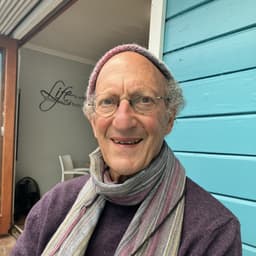
Dr Bernard Brom
Founder, Creating Health
Bernard Brom qualified in medicine in 1965. He gave it up, travelled for six years, and came back to spend the next sixty asking one question: how does health actually work? He founded the South African Society of Integrative Medicine, chaired it, started its first journal, wrote two books — and still sees a few patients every week, "to stay in touch with the territory."
Continue exploring