Health & Healing
Health & Healing

What I am learning from the different diets, and the way Blue Zone people live, is that it is all about moderation, balance and fresh food, and about community, belonging and meaning as much as what is on the plate.
The Blue Zones refers to areas where people live in more traditional ways, close to nature, and have extended life spans. Check out my August newsletter 2026 where I describe the different Blue Zone groups.
What I am learning from examining the different diets, and the way Blue Zone people live, is that it is all about moderation, balancing food groups, using fresh, organic, free-range foods and keeping away from processed, junk and oxidized foods.
The real secret to the health of the Blue Zone people may just be that generally processed foods are not easily available, and when this does become available serious diseases like diabetes, cardiovascular disease and cancer begin to appear much earlier.
This has happened to almost all indigenous groups once they come in contact with processed foods, and their connection to the land is severed. With that severance, and the need for a cash economy, social structures are disrupted, and the breakdown of the extended family ls leads to social fragmentation. Food grown by local people in the area is replaced by processed foods, like oils, grains and sugar.
I suggest that the heart of our food choices should be plant-based, with good quality protein in moderate amounts and non-oxidized fats. Herb teas, organic coffee and some red wine daily are healthy. Wine, even red wine has more recently been givenm a negative rap because of its effects on brain function, and the possibility of it slowly leading to degeneration and early onset dementia.
My personal feeling is that the research may be faulty. Blue zone people drink wine and may love to party. Good quality wine when drunk by a person eating healthy foods, and when stress not a major factor, will I believe not be detrimental to the liver or brain. This is the problem with all medical studies. It is impossible to do thoroughly because of costs, poor understanding of healing and a very small focus to study all the conditions that are involved. Dietary variations aren’t considered, for example genetic background, the level of emotional stress, the microbiome, sleep patterns etc of each person in the trial. This of means that there is no way to have two equal groups to compare. Just because everyone in both groups may have high blood pressure does not make the two groups equal, and this is why most studies are not repeatable.
A low-fat diet will clearly reduce cholesterol, as I have demonstrated personally some years ago, but I am not convinced about the importance of this if the foods generally eaten are organic and fresh. I can’t emphasize enough how important the freshness of all oils is and especially keeping them away from oxygen and light. Many oils today are highly processed and cannot be regarded as a healthy food. Only cold-pressed oils should be used.
Red meat is fine to eat, but perhaps only 2-3 times per week and sourced from grass fed animals. Free-range eggs in moderation seem to be healthy enough, and dairy products depend on the source and whether the person has sufficient lactase to digest the milk, and of course that there is no dairy allergy. There does seem to be a difference between A1 and A2 milk, which will make a difference to some people. The A2 milk comes from ancestral cows and has a slightly different amino acid profile which makes a difference to the way the body digests milk. The A1 milk is more inflammatory and can cause indigestion in some people. If you feel intolerant to milk, then definitely try the A2 milk (usually marked with an A2 label), which is available in South Africa. Even cheese and yoghurt are available from A2 cows and should always be the first choice.
The same applies to gluten containing products. One health shop owner tells me that if people grind their own wheat kernels to make bread, and use the sourdough method of preparation, there won’t be a gluten sensitivity. Perhaps gluten sensitivity is not really due to the gluten but the additives to bread, not using the sourdough method of preparation and using grains that have been stored in silos subjected to sterilization with gas. Gluten sensitivity seems much less common in Europe, perhaps because the storage and preparation is different.
Whole grains, nuts and seeds should be eaten in moderation.
Studying the Blue Zone diets has brought me back to the recognition of balance in diet rather than choices that require a concentration of a few selected food groups, that is, away from an exclusive plant-based vegan type diet at one extreme, or a high fat diet on the other, towards a more balanced moderate Mediterranean style diet. For me this has meant cutting eggs down from 6 to 8 a week to 2 to 4 eggs a week; less red meat; fish at least once a week. I use cold-pressed olive oil as a salad dressing. I usually add tahini (sesame paste) to my salad as well. Use cold-pressed coconut oil, butter or ghee for cooking.
Coffee is fine for many people but tends to be over-stimulating for me. When I do choose coffee it is always decaffeinated. My usual hot drink is green tea mixed with hibiscus flowers, or rooibos tea which I drink twice per day. I do like dark 70-80% chocolate.
While I have concentrated on the Blue Zone diet above, another important factor, and perhaps even the most important factor, is the way Blue Zone people live in a community of shared space, dancing, singing and giving time for others in their life. They are particularly noted for their care and respect for the elders, who remain active and included in the daily life of the community.
Intimacy, belonging and social bonding go a long way to improving longevity.
We all know people that don’t eat well and yet live to an old age, happily drinking alcohol, white bread, eat a meat-based diet, a limited variety of vegetables…mainly potatoes, green beans, peas and tomatoes.
Clearly there is a genetic aspect to this, alcohol relaxes people and makes them more sociable and if they have a long-term comfortable partnership, then just perhaps this is enough to make all the difference. We also know people that eat really well, exercise hard, don’t drink or smoke, and yet die young.
Lifestyle management is important and will make a difference to longevity and quality of life. But each person is also unique, and the sense of meaning and purpose may be the most important factor in supporting healthy outcomes. The placebo response is what I call ‘meaning medicine’ and may be the most powerful medicine we have. People can respond to the placebo no matter what the cause or even the diagnosis.
That’s so interesting, and why I spend a lot of my time thinking about this response and how to activate it in my clients. Perhaps this is why the Blue Zone people live long, not only because of what they eat but their relaxed lifestyle, living close to nature and often growing their own food.
Check out more information on the Blue Zone people in my newsletter September 2026
Sources & further reading
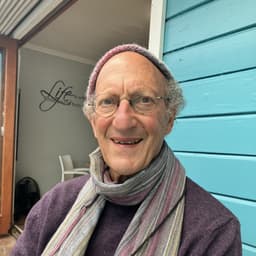
Dr Bernard Brom
Founder, Creating Health
Bernard Brom qualified in medicine in 1965. He gave it up, travelled for six years, and came back to spend the next sixty asking one question: how does health actually work? He founded the South African Society of Integrative Medicine, chaired it, started its first journal, wrote two books — and still sees a few patients every week, "to stay in touch with the territory."
Continue exploring
Health & Healing